Nightnote

A short, calming bedtime story for adults.
Emailed every night.

Designed to be quiet enough to fall asleep to. Each note is slow second-person prose with no characters, no plot and no twist, and it arrives with one small, dim painting of its scene. You can turn the picture off. $11 a month. No app, no audio, no account.

One quiet email a night. Reads in the dark on a phone. The first note arrives a few minutes after signup.

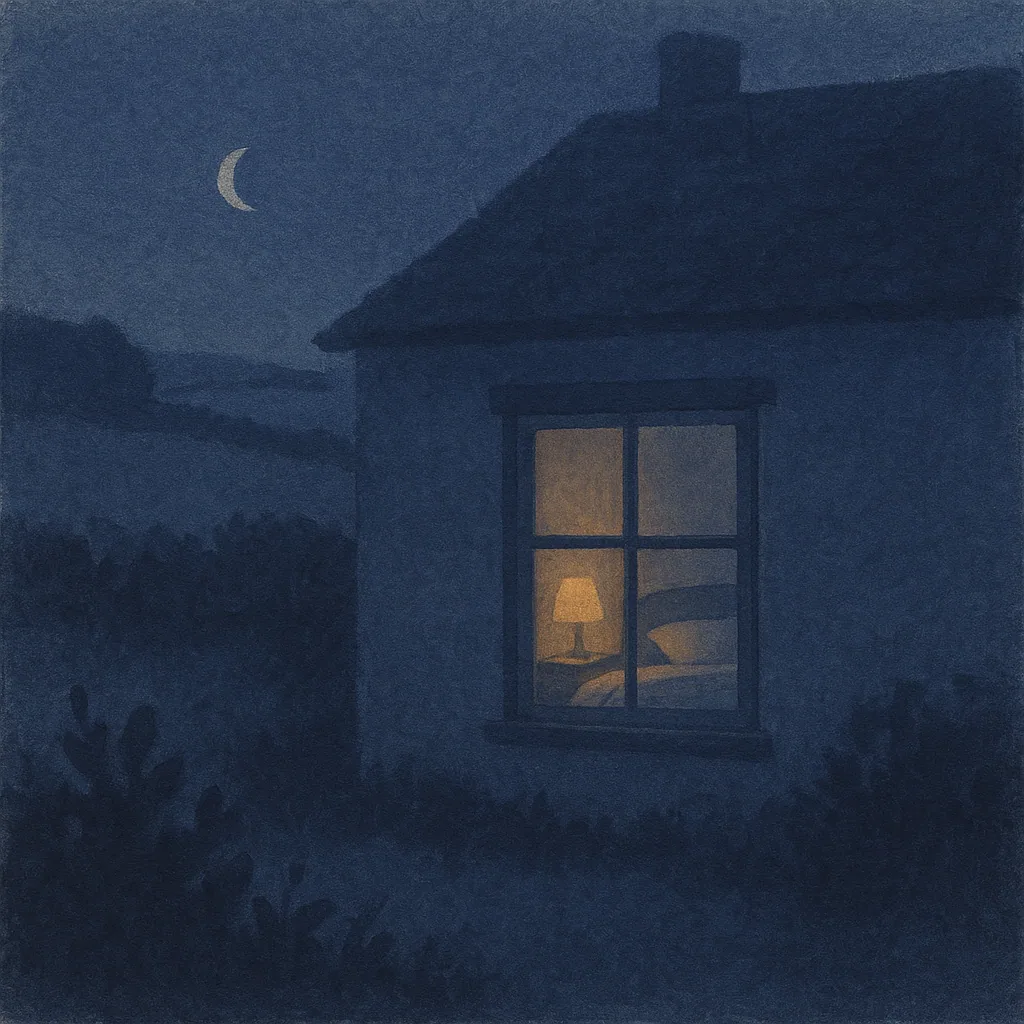
Painted illustration: a cottage bedroom window at dusk with a lamp lit beside the bed, a crescent moon over the fields beyond.

Designed to be quiet enough to fall asleep to

We think a bedtime story should not try to keep you listening. We are paid by month, not by minute. Each note is engineered to fail engagement on purpose: nothing happens, the sentences get longer, the ending dissolves rather than concludes.

No app, no headphones, no account

Just an email at the time you choose. Reads on the phone you already have in the dark. No microphone permission, no notifications, no library to scroll, no narrator's voice to disagree with.

$11 a month, cancel any time

One flat monthly price, with every note and its picture included. Cancel through the customer portal in two clicks; future months stop billing immediately, no email back-and-forth required.

See what arrives — a real sample

The Slow Train Through the Fields

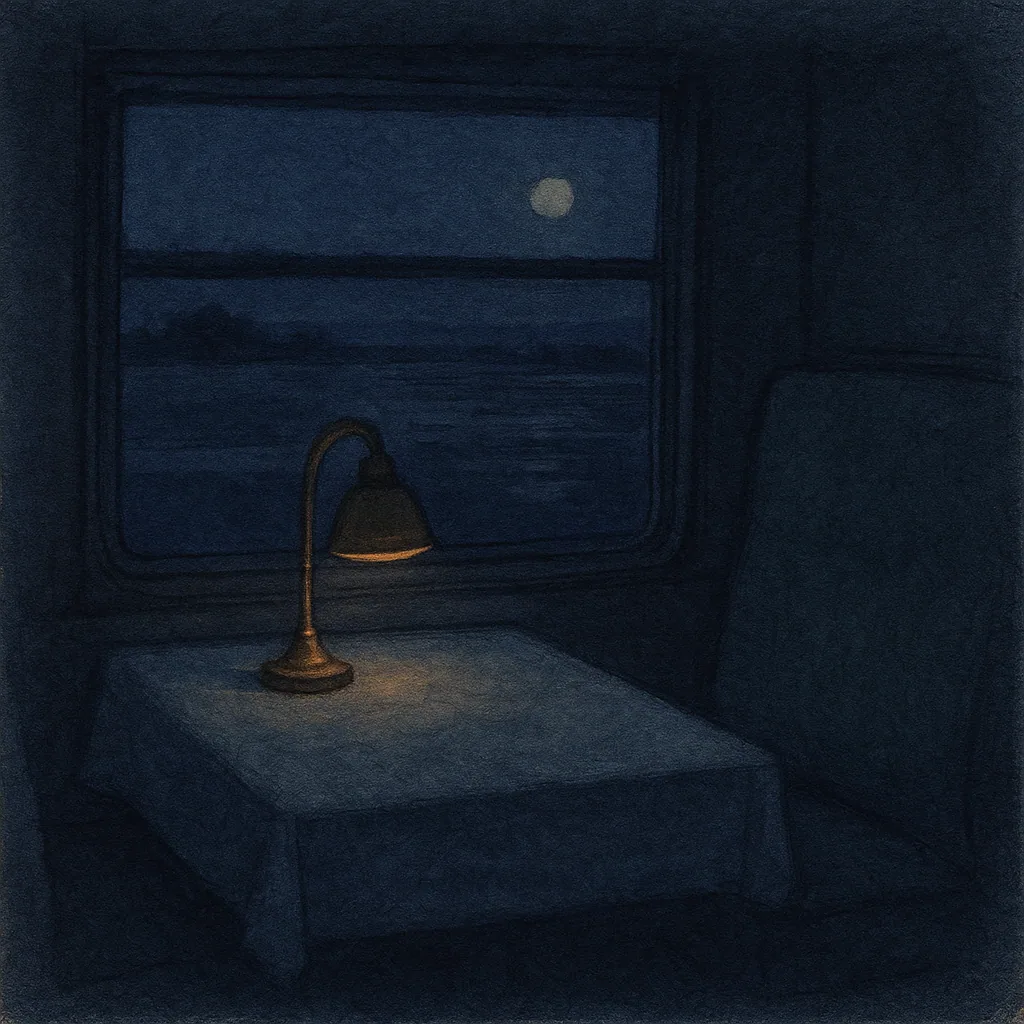
Painted illustration: a dim old train compartment at night: brass reading lamp glowing low over a worn cloth-covered table, green moquette seat, dark window holding the lamp's faint reflection above moonlit flooded fields.

The brass collar of the reading lamp at your shoulder has gone smooth underneath, where fingers have turned it toward one page or another for longer than the varnish has lasted. You move it a few degrees downward and the light settles into a circle on the table. The cloth there is an older weave, thinned to threads at the corner nearest the window. The carriage takes a curve and the whole compartment leans, holds the lean, and comes back. Beyond the glass the dark is not complete. There are fields out there, black and level, and one farmhouse light standing in the middle of them. It travels along the window frame at the pace of a walk, then goes behind an embankment.

Inside, the lamplight reaches about as far as the opposite seat and stops. The panel between the windows is walnut veneer, laid in a fan, and the seams of the fan have lifted a little with the years of heat and cold. Above the seat there is a mirror with its silvering gone in freckles around the edges, so that the reflection of the lamp sits inside a scatter of small blooms. The luggage rack is woven cord on a brass frame, sagged in the middle in the shape of the cases that have rested there. On the wall below the rack, a framed photograph of mountains has faded to blue with a paler band down one side where the sun used to fall. The seat cushions are dark green moquette. Along the front edge of yours the nap is rubbed to a shine, and the shine runs the whole width, thinning where knees have passed.

The sound comes up through the floor first, then through the seat frame. The wheels cross the rail joints in sets of four, close together and then apart, close together and then apart, and the rhythm changes slightly when the train crosses a bridge and the noise goes hollow underneath. The pane beside you sits in a rubber lip that has hardened, so the glass ticks against it on the longer curves. Somewhere ahead a door in the corridor is drawn open and let go, and it rolls the last of the way and knocks into its jamb. Two carriages back, the guard is humming. It is eight or nine notes, then a pause, then the same notes again lower down, and the language they came from is not one you can place. He stops in the middle of a phrase and starts it later from the beginning.

Questions

Wait — is the story supposed to be boring?

Yes. The writing is built around drift rather than suspense: no characters, no arc, no surprise to stay awake for. The prose slows, the scene widens, and the ending trails off instead of concluding. We are paid by the month, not by how long you read, so a note that loses you halfway through has done its job. If you read all the way to the end every night, we have failed.

How is each note written?

Fresh on the evening it's sent, in one fixed dim, nocturnal style: falling-pace prose with no characters and no dialogue, built to dissolve rather than conclude. Its illustration is made from the note's own scene. Read the sample to see if the result feels right before you pay for a month.

Can I have the words without the picture?

Yes. The manage link at the bottom of every note has a switch for the illustration. Turn it off and your notes arrive as words only, from the next evening on. If a picture ever fails to paint, the note still arrives on time without it.

Will it actually help me fall asleep?

We do not promise sleep — we cannot, and any product that promises sleep is overstating its case. What we do promise is the mechanism: short, slow, emotionally low-stakes prose with no plot to hook into, that you can read in the dark on a phone. Whether your particular night yields to it is up to your night.

How do I cancel?

From the manage link at the bottom of any nightnote email. Cancelling stops future billing immediately — no future months are charged.

What's your refund policy?

Quiet and verifiable. If our logs show no nightnote went out in your billing month, that month is refunded automatically — use the refund link in your receipt, valid for 90 days. If notes were sent but our logs show you never opened or clicked any of them, the month is refunded too — same link, available for 30 days after the period ends. If you opened any note in the month, we don't refund it automatically; if something still feels off, email nightnote@forage.bot and we'll work it out quietly.

What data do you collect?

Your email, the local hour you'd like the note to arrive, and any optional themes you list. No name, no profile, no demographic data. We never sell or share what you give us.

Is there an audio version?

Not yet. Audio creates an expectation (good narration, no jarring TTS) that we don't want to undercommit on. The text-first version is the v1; if there's clear demand we'll add a calm narration tier later. The product is designed to be read in the dark, so audio isn't strictly necessary.

Why text instead of an app?

Apps assume you want to engage. Email assumes you don't. The note arrives, sits patiently in your inbox, and waits until you reach for your phone. No badge, no notification, no streak.